
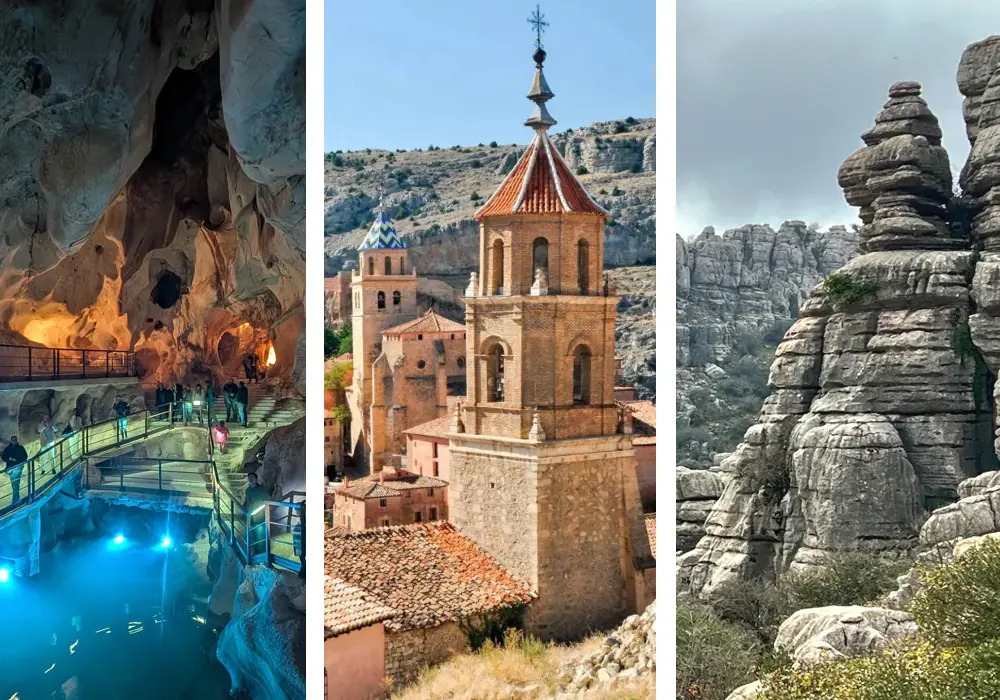
Escape the crowds and discover the most authentic, unexplored locations in Spain for your next road trip adventure.
Let’s be honest: standard Spanish travel guides can feel incredibly repetitive. The moment you land in Madrid, everyone tells you to take a day trip to Toledo or Segovia. Don’t get me wrong, those cities are beautiful, but they are also packed to the brim with tour buses, selfie sticks, and overpriced souvenir shops. If you are the type of traveler who craves something deeper, raw, and genuinely authentic, you need to ditch the crowds and head somewhere most international tourists don’t even know exists.
Spain is hiding some of the most surreal landscapes and forgotten historical corners in Europe, all easily reachable if you are willing to look a little further. Imagine driving through a massive stalactite cave just to enter a secluded northern village, or wandering through a medieval town built entirely of pink stone where you can only hear the wind. Whether you want to rent a car for a proper road trip or jump on a high-speed train, this list of hidden gems in Spain off the beaten path will take you straight to the heart of the country’s best-kept secrets.
1. Albarracín
LOCATION: TERUEL, ARAGON
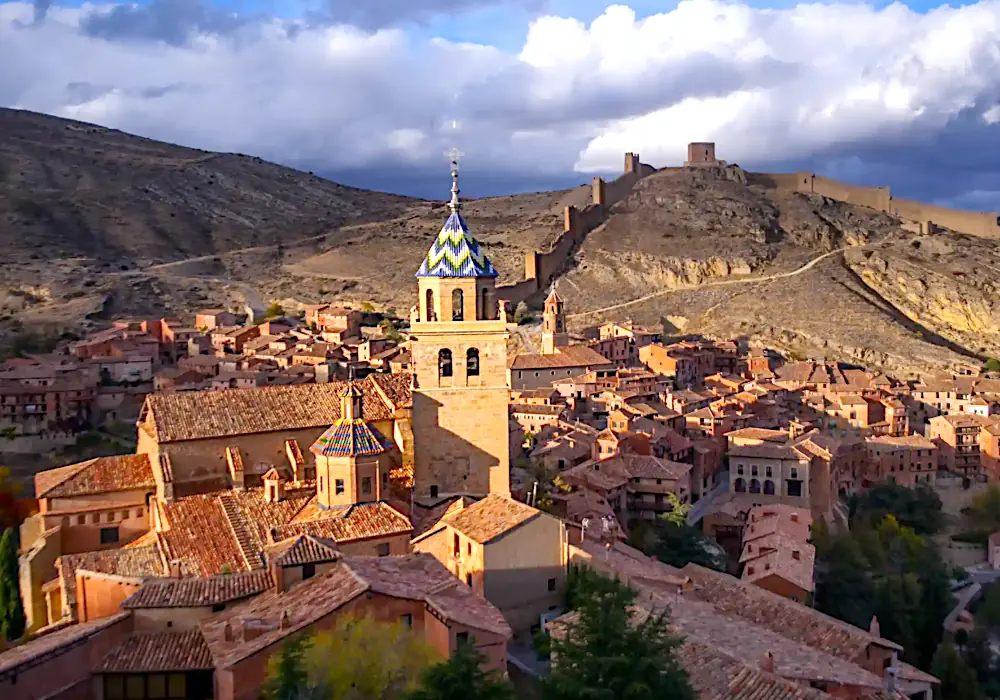
Imagine a medieval mountain village that looks like it was carved entirely out of pink and terracotta stone. Because it is tucked away deep in the hills of Aragon, mass tourism hasn’t managed to ruin it. The layout here is delightfully chaotic: houses literally hang over narrow, winding alleys, and an enormous stone fortress wall snakes all the way up the mountain ridge above the town. The absolute best thing to do here is wait until sunset, grab a spot on a hill, and watch the entire village turn a deep, glowing rose color.
- You can hike along the massive ancient walls for an incredible view of the gorge.
- The town feels frozen in time, with almost no modern signs or flashing storefronts.
How to get there:
LOGISTICS: It is a solid 3-hour drive east from Madrid. You definitely need a car for this one, as public transport into these mountains is almost nonexistent.
2. Cuevas del Agua
LOCATION: RIBADESELLA, ASTURIAS
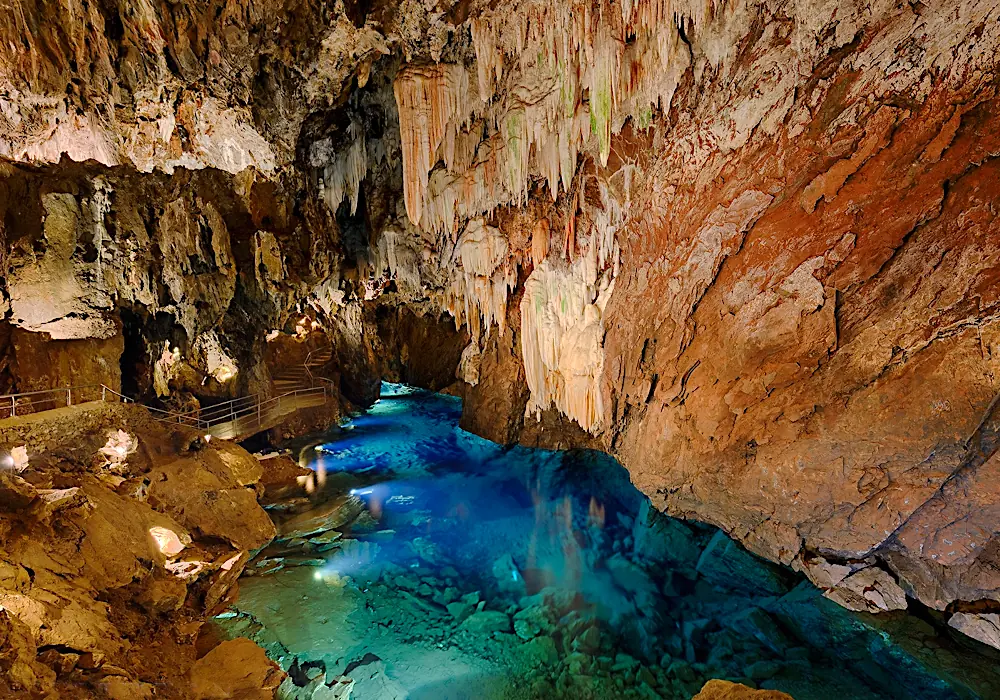
This tiny, peaceful village in Northern Spain has one of the coolest entrances in the world. To get inside, you have to drive or walk through a massive, 300-meter-long natural stalactite cave called “La Cuevona”. There are no gates or tunnels—just a real, dimly lit cavern with a river running right alongside the asphalt road. Once you emerge on the other side, you find yourself in a hidden paradise of bright green hills, traditional Asturian houses, and quirky wooden granaries built on stilts.
- Walking through the cave on foot lets you hear the water dripping and see the massive rock formations up close.
- It is deep in rural Asturias, meaning you will experience authentic country life and great local cider.
How to get there:
LOGISTICS: About a 4.5-hour drive north of Madrid. Save this for a proper road trip through the green, coastal north of Spain.
3. Las Médulas
LOCATION: EL BIERZO, LEÓN
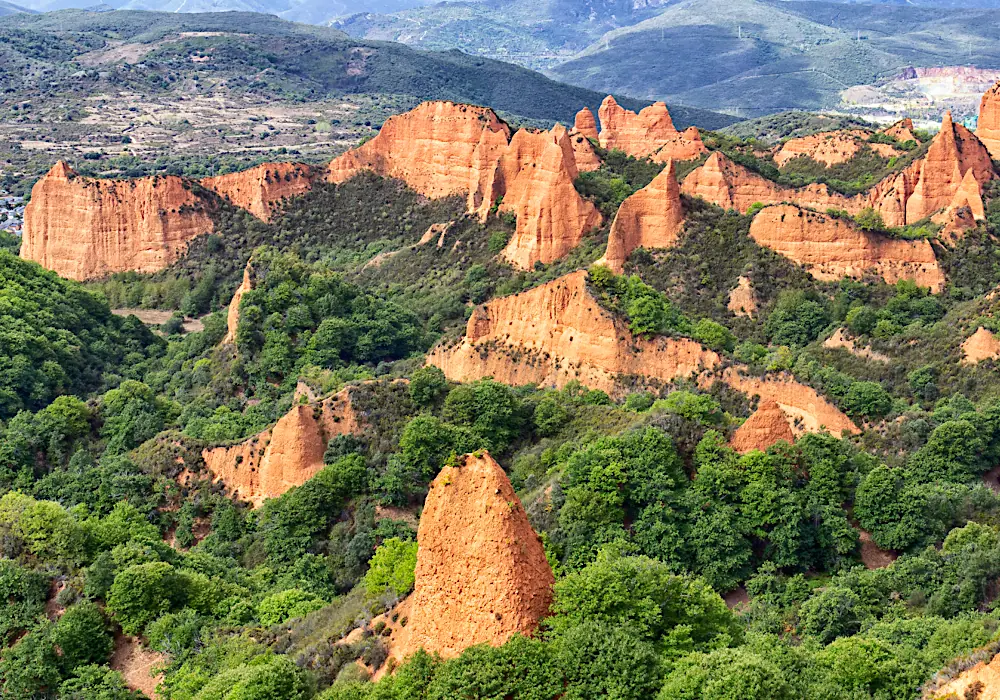
This landscape looks like a movie set for a sci-fi film about Mars, but it is actually a 2,000-year-old eco-disaster. Back in the 1st century, the Roman Empire used massive water pressure to literally blow up these mountains to wash out gold. What they left behind is a stunning maze of jagged, bright-red clay peaks towering over a deep green forest of ancient chestnut trees. It is quiet, dramatic, and completely unlike anything else you will see in Europe.
- The hike up to the “Mirador de Orellán” viewpoint gives you a mind-blowing view of the red towers cutting through the green canopy.
- You can explore some of the old, massive tunnels left behind by the Roman engineers.
How to get there:
LOGISTICS: Take a high-speed train from Madrid to León (about 2 hours), rent a car there, and drive the remaining hour and a half into the valley.
4. Royal Palace of Olite
LOCATION: OLITE, NAVARRE
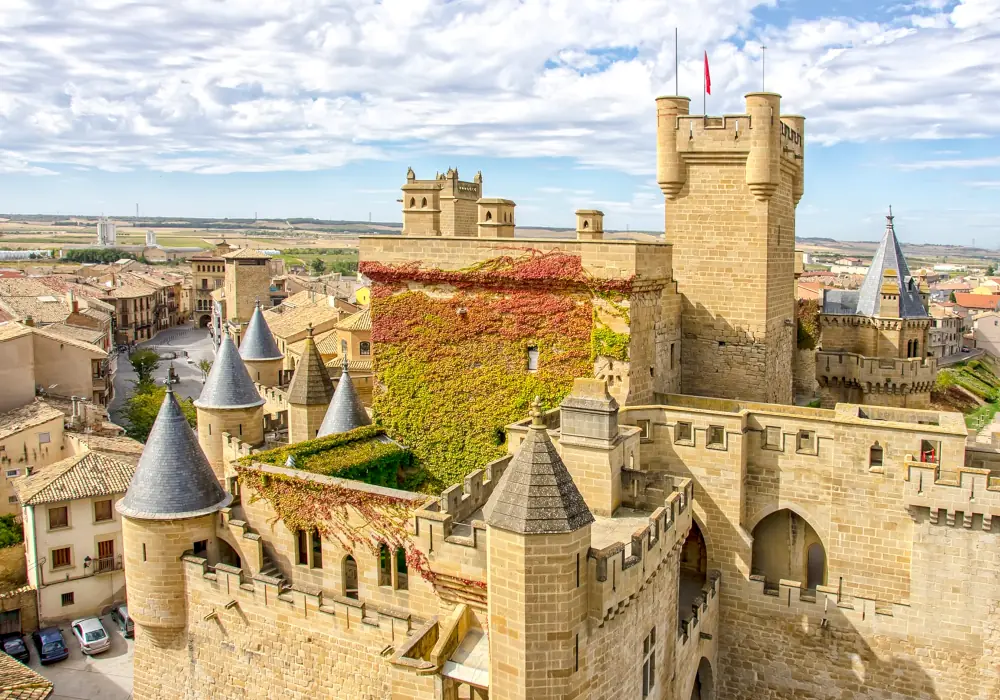
Most people flock to the castle in Segovia, but the Royal Palace of Olite is arguably much cooler and way less crowded. It wasn’t built for boring military defense; the medieval Kings of Navarre designed it as a pure luxury playground. It is a whimsical playground of mismatched towers, secret courtyards, spiral staircases, and even ruins of old hanging gardens. The best part? They pretty much let you run wild here—you can climb almost every tower and explore the stone passages completely at your own pace.
- Climbing to the top of the highest turrets gives you a view over a beautiful medieval town surrounded by vineyards.
- The surrounding region is famous for incredible, local boutique rosé wines that cost next to nothing.
How to get there:
LOGISTICS: Roughly 3 hours north-east of Madrid. You can take a direct train or drive through the scenic plains of Navarra.
5. El Torcal de Antequera
LOCATION: ANTEQUERA, ANDALUSIA
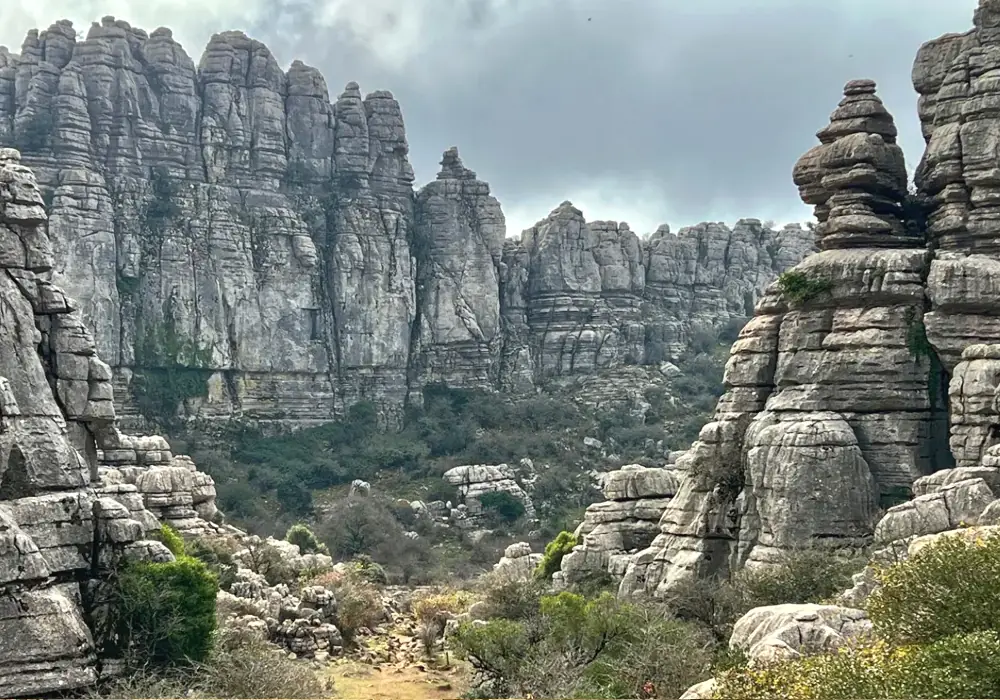
If you want to feel like you are walking on the bottom of a prehistoric ocean, head south to El Torcal. Over 150 million years ago, this entire area was underwater. Over millennia, tectonic shifts pushed the limestone up, and wind and rain carved the rocks into bizarre, flat, layer-cake formations. It feels like walking through a giant, silent labyrinth made of stone. Plus, because it is a protected nature reserve, you are almost guaranteed to run into wild mountain goats chilling on top of the limestone pillars.
- There are easy, well-marked hiking loops that take you right through the middle of the surreal rock formations.
- The air up here is incredibly crisp, and the silence inside the stone valleys is magical.
How to get there:
LOGISTICS: Super easy. Catch the high-speed AVE train from Madrid to Antequera-Santa Ana (just over 2 hours), then grab a 20-minute taxi straight to the visitor center.
A Few Real-Talk Tips Before You Hit the Road
Before you pack your bags and rush out of Madrid, here are a few practical things you should know to make sure your trip goes smoothly, without any nasty surprises.
- The Car Situation
Let’s be real — you absolutely need your own wheels for most of these spots. While Spain’s high-speed trains (like the AVE) are amazing for getting from Madrid to bigger hubs like León or Antequera, they won’t drop you off inside a hidden mountain cave. Rent a car right at Madrid-Barajas airport or Atocha station, and make sure it’s a smaller one. Trust me, trying to navigate narrow medieval streets in a massive SUV is a nightmare you don’t want. - Watch Out for Tolls (Peajes)
When mapping out your route on GPS, keep an eye on toll roads, marked as “AP” (Autopistas de Peaje). The regular “A” roads (Autovías) are completely free and usually just as good and scenic. If you do end up on a toll road, don’t panic — you can pay with a regular contactless card or cash at the barrier. - The Language Barrier is Real Here
Because these places are blissfully free of mass international tourism, English isn’t widely spoken. Don’t expect the waiter in a rural Asturian village or a mountain bar in Teruel to fluent in English. Download Google Translate for offline use, learn how to say a polite “Hola” and “Gracias”, and just smile. The locals are incredibly friendly and will always help you out if you show some effort. - When to Go
Spring (April to June) and Autumn (September to October) are the golden windows. You’ll get perfect hiking weather, beautiful colors, and you won’t melt under the brutal 40°C (104°F) summer heat of Central and Southern Spain. Plus, the landscapes look much more dramatic when the sun isn’t bleaching everything out.